"In many disciplines, for the majority of graduates, the Ph.D. indicates the logical conclusion of an academic career." Marc Bousquet

Wednesday, July 13, 2011

Rediscovering Mornings (Or, Yoga on a Day of Short Posts)

Now that the Congressman's gone, I'll write what I was going to originally. Namely, I finally decided to give in to the kittehs and get up to feed them at 5:30 AM (instead of what I usually do -- put up with their annoying whining, sitting on my chest, and attacking each other ON THE BED while I'm trying to finish sleeping). Getting up this early, I was able to get to yoga (which I've been woefully neglecting) at 6:30 and still get back home by 8:00, which is when I usually get up, in order to shower etc. and get to the office by 10:00.

Morning yoga was awesome. First, it was awesome to go for the second time in a week (I went Saturday, and it's been a couple months since I've gone more than once a week). I get regular exercise walking to and from work -- just under 2 miles each way -- but it's not the same as yoga. Second, mornings just as the sun is coming up are cool and peaceful and quiet compared to the rest of the day, so walking over to the yoga studio (and back) was awesome. Third, not that many people are crazy enough to haul a$$ out of bed at 5:30 AM in order to get some yoga in before work, so the class was small, which was awesome. On weeknights and weekends, the classes can be so crowded that you have to be careful not to whack your neighbor with an arm when you're doing sun salutations

Via
Via
or kick someone behind you when you roll over from shoulder stand to plow pose.
Via
Fourth, I will totally never be able to do this

Via


crazy, amazing cross between a headstand and a handstand if I don't practice!! (Hey, I may never be able to do it anyway, but it's nice to have goals -- both short-term, like getting up early a few days a week to GO to yoga in the first place, AND long-term ones...)

And, lastly, yoga is just plain awesome, inside and out, and it's worth getting up early to do.


There Is a Former Congressman in My Office Right Now

I have nothing profound to say here. Just thought readers might find it amusing that someone as eccentric as me is sitting typing on this crazy blog -- live blogging the moment, no less -- not ten feet away from a former member of Congress.

He is "former" because, apparently, his "2010 Republican primary opponents asserted that his voting record in his second House spell was more moderate than his first. He was one of 17 House Republicans who voted for a Democratic resolution opposing the Iraq War troop surge of 2007, and has spoken against climate change scepticism, offshore oil drilling and warrantless surveillance since returning to the House."

BUT he's pro gun and pro life.

Ah, contradictions.

Monday, July 11, 2011

Surprise! Conservative Christian English Instructor Finds Animal Studies and Posthumanism Objectionable

I am not going to dignify the opinions expressed here by writing a defense of Animal Sudies (Go ahead and take a look and then tell me why again have I linked to this in my blogroll? Sometimes they do post insightful pieces, but this? Meh...). I think scholars working in Animals Studies, a few of whom are mentioned in the article, do a fine enough job of articulating why their work is valuable to the humanities. It's easy enough to deride the titles of academic papers, as the author does -- especially those that suggest ideas one finds objectionable -- for reasons of religious belief, rather than engaging with the arguments meaningfully.

But, forget engaging meaningfully with key scholars. How about simply reading what the Institute for Critical Animal Studies says about the field in an introductory paragraph? While Conservative Christian English Instructor does cite and even quote from the ICAS website, she seems to have lost the capacity for basic reading comprehension. She writes,
Adherents of Critical Animal Studies generally look with contempt on animal-welfare organizations and “animal studies” not preceded by the word “critical.” 
But the whole point of Critical Animal Studies, again according to the ICAS's website (from the description of their journal, JCAS), is
to breakdown and mediate oppositions between theory and practice, college and community, and scholarship and citizenship, in order to make philosophy (in a broad sense) again a force of change and to repatriate intellectuals to the public realm.
In other words, far from looking with contempt upon these related fields, Critical Animal Studies seeks to bring together the activist work of "real world" animal welfare organizations and the theoretically oriented academic work of Animal Studies. The whole point is that theory and practice work best -- and accomplish more -- together.

Sure, interpretation can be political (pick your side), but critics owe it to their political opponents to understand their positions before disputing them. To do so, basic reading comprehension is a prerequisite, and Conservative Christian English Instructor fails to meet it (BTW, she doesn't identify as a conservative Christian in the article, but if you Google her name, that's the first thing that comes up, a self-description on her website).

Moreover, she struggles with the term "posthumanism," another prerequisite to "getting" either Animal Studies or Critical Animal Studies (she'd have some real fun with Animality Studies). Admittedly, posthumanism has a host of differing and complex definitions, as well as varying origins, but if the whole business of poststructuralism isn't your cup of tea (and it is clearly not CCEI's), please stay away from Foucault.

Far, far away...

What CCEI does get is that posthumanism is indeed a response to Western humanism, what it's done and what it stands for -- that posthumanism represents a rejection or at least a critique of the anthropocentric notion that humanity is golden, that whatever serves "Man's" interests is right and good in the eyes of God, that God Himself created Man in His image to do His work on Earth....

But here we are, at the end of Conservative Christian English Instructor's essay, back to square one, for she does, indeed, recognize exactly what posthumanism (and fields like Critical Animal Studies that draw upon it) means to her own core beliefs: Making such critical moves signifies
the rush to embrace the primitive and the popular in order to undermine the Judeo-Christian ethic of man’s dominion and the Enlightenment emphasis on reason and reasonable discourse.  This is just one of the ominous aspects of  Critical Animal Studies.
Well, exactly. But why is such a challenge "ominous"? Isn't there a way to approach posthumanist and other poststructuralist positions through reason?

In fact, reason never really went anywhere, even as we critique it. We just no longer think of it strictly in opposition to emotion, in a relationship of positive to negative, male to female, human to animal, etc. (pick your Derridean pair). But.....can we have some, please? Can't we do more than simply point and say, "Look! There's a fly in my Golden Chalice. Look, see? It's a fly!"

Or, a sphinx in our historical vista:
Via
Or a freakin' snake in the Garden:

Via
Posthumanism and Critical Animal Studies may be relatively new, but it's not as if there isn't a fairly long history of humans turning to animals in the search for identity.

*   *   *   *   *   *   *

What's new is that in the last century and a half since Darwin published The Origin of Species, it has become less and less reasonable to presume upon mere faith that humans are entirely exempt from the rules that govern the coming, going, and changing of all the other species that inhabit the planet Earth. In other words, the opposition between "human" and "animal," whatever differences you might point to, itself has become less than a rational one.

The ultimately ominous portent of posthumanism for someone like CCEI is surely that, implicitly, it embraces a Darwinist narrative and suggests that humanity itself will, over time, eventually either evolve into something "posthuman" or go extinct.

Friday, July 8, 2011

Research Update

A number of weeks ago, I wrote about my frustrations over being cut off from library access, now that I am no longer "affiliated" with Grad U. Obviously, that might present an obstacle to anyone trying to work on a scholarly project -- like, say, revising one's dissertation into a book. (If you missed that post, do go back and read it. Whatever your personal feelings about continuing your scholarly work outside of academe, there really is something quite troubling about the notion that affiliation is a prerequisite to scholarship and that paying to maintain a past affiliation is not even an option for many people.)

But, despite the cursing and fuming, I was hardly daunted, and, while I am in no hurry to race through this project (after all, I'm not on the tenure clock), I do aim to make steady, if slow, progress. While some readers might not find such posts as this one especially interesting (if you left or are planning to leave academe because you've discovered you dislike "academic" work), I will be writing them every now and then as a way of holding myself accountable, as well as sharing with anyone who may also be attempting to self-reinvent as an independent scholar.

So here's the shakedown five weeks after my affiliation/access meltdown:
  • Pulled myself up by my bootstraps, went up to campus, and got myself an alumni borrowing card. 
  • Still don't have remote access to the databases, but that's not a big deal. It's easy enough to go up to Grad U., and when I go there on a weekday to do research for work (because, on occasion, the databases come in handy for that, too), I can expense the train and bus fare. Plus, most of what I need to look at for the dissertation-to-book process are books, not articles.
  • The downside to my new status in terms of borrowing books is that, instead of keeping them checked out for a year, the maximum borrowing period is only 56 days. Damn!
  • The upside to my new status in terms of borrowing actual books is that, instead of keeping them checked out for a year (or renewing them for endless years!) during which time they mostly gather dust, I have to be organized about reading them, taking note of what I need quickly, and moving on. 
Once I adjusted myself mentally to these new parameters, I set myself the task of putting together a reading list. A lot of new and relevant books have come out in late 2010 and the first half of 2011 -- the titles are, well, tantalizing! I've got my list of secondary sources I need to go through and good chunk of the primary sources (much of which involves an author I'm really looking forward to getting into more in-depth and the rest a genre that is good "fun" reading, as well scholar fodder).

So, with the reading list done enough for a trip to the library, here's a general to-do list and overview of my plans for the next few months:
  • Take reading list, as well as all the old books I still have checked out (with new, quickly approaching due dates) collecting dust at home, and haul a$$ up to the library. Won't happen this weekend but some weekday this coming week, if there's time, or next weekend will be just fine.
  • Spend a few hours in the library sorting things out, figuring out what's worth checking out of the library, what's merely worth perusing casually and setting aside.
  • Check out only as many of those suckers as I think I can reasonably get through in 56 days.
  • Go home, read, take notes, organize thoughts. 
  • 56 days from mid July is roughly early to mid September. Go back to the library then and repeat the above. Check databases at this time or after the next 56 days to cull whatever needs to be read from there. 56 days from mid September is mid November. Thus, optimistically speaking, I will be done with research by Thanksgiving.
  • Write, write, write. Dissertation, goodbye in 2011. Monograph, hello in 2012!
  • Have a draft of the book ready to submit to editor at Very Fancy Press by early summer 2012 -- that is, in a year.
And this is a very reasonable timeline, I think, too. Wish me luck and stay tuned for future updates.
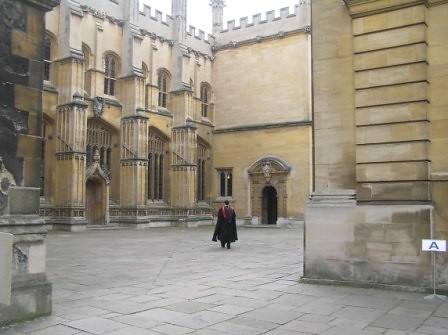
The greatest library in the world.....

Tuesday, July 5, 2011

The Paradox of Value in Humanities Education

Readers of this blog know that money comes up a lot. I quit my job as an adjunct because of money, largely (and lack of opportunities for promotion, too, but money was a big part of that). I complain about salary inequities in academe frequently. I weigh the value of the Ph.D. in terms of its potential to get you a decent job both inside and outside academe.

But the paradox of all this complaining -- and the reason, I think, that compels a lot of people to go to graduate school in the humanities despite the economic farce (bordering on tragedy for some) they face upon finishing (or quitting) -- is that you cannot properly assess the value of a humanities education in terms of money. Neither on the scale of the individual nor society.

Consider what Martha Nussbaum suggests as merely a "sketch" in Not for Profit: Why Democracy Needs the Humanities. Among the things the humanities offer are:
  • The ability to imagine well a variety of complex issues affecting the story of a human life as it unfolds: to think about childhood, adolescence, family relationships, illness, death, and much more in a way informed by an understanding of a wide range of human stories, not just aggregate data.
  • The ability to judge political leaders critically, but with an informed and realistic sense of the possibilities available to them.
  • The ability to think about the good of the nation as a whole, not just one's own local group.
  • The ability to see one's own nation, in turn, as a part of a complicated world order in which issues of many kinds require intelligent transnational deliberation for their resolution
None of these things is directly measurable by economic means, neither in terms of investment nor return, because the "product" is impossible to quantify or contain. One of the reasons we like to talk about a college education in terms of an individual's financial "investment" and the "returns" of a "better" job, higher wages, and greater opportunities is that some of the arguably greater benefits to being educated are less easily packaged. Moreover, taxpayers increasingly want to know what they are getting when they subsidize public colleges and universities and student loans, but can you really put a price on the cultivation of imagination, critical thinking, creativity, and emotional literacy? Jonathan Bates writes, of the public value of the humanities,
Government and its officers have a prime duty to account for the expenditure of taxpayers’ money, but in measuring the value of research a much subtler style of accountancy is required. There is something especially inappropriate about the attempt to quantify the ‘value’ and ‘impact’ of work in the humanities in economic terms, since the very nature of the humanities is to address the messy, debatable and unquantifiable but essentially human dimensions of life, such as history, beauty, imagination, faith, truth, goodness, justice and freedom. The only test of a philosophical argument, an historical hypothesis or an aesthetic judgment is time – a long period of time, not the duration of a government spending review.
 Bates is speaking specifically about research, but that's gotten a bad rap by some recently, and, more importantly, the correlation between research and teaching in the humanities is not a small one. The point isn't that every scholarly argument that's published in an obscure journal intended for an audience of peers makes its way into the classroom. The point is that if we are teaching students habits of mind as much -- if not more so -- as we are teaching them content, it's important that we practice what we teach -- that we continue to produce knowledge, continue to inquire, continue to seek.

There is no economic measure for this, but there is also no getting around the cost.

And what do we lose when the seekers can no longer afford to be teachers, when they simply walk away?

Via

Monday, July 4, 2011

Or, Maybe Just...

Fire up one of these and go here.

Via

Freedom (Happy 4th of July, Sort Of)

So, today is the 4th of July, and everybody wants to celebrate freedom -- the freedom to set off illegal fireworks (as the kids around here do until 3:00 AM), the freedom to fire up the grill and cook some hot dogs, as my next door neighbors do, the freedom to eat apple pie, to wave flags, to clap along as the band plays "Stars and Stripes," to gather in the street at the top of the neighborhood hill to watch the city's public fireworks display from afar (because, really, who wants to go through a security checkpoint to see fireworks, especially when you're not "free" to bring beer?).

Freedom is a pretty big deal in libertarian think tank land, as you would expect. We have a bumper sticker in the office that says "I believe in freedom. What do you believe in?"

I'm a progressive, souless. hipster atheist, and I don't believe in anything, by some people's reckoning. But I remain mystified: How, again, does one exactly "believe" in something so abstract? Libertarians and conservatives love to throw "freedom" around,  as if it were a football or a frisbee, and all you have to do is catch it, run with it, and pass it on. And, of course, it has such connotations -- the American Revolution, the Liberty Bell, the Statue of Liberty, Presidents George Washington et al.

Hot dogs, apple pie, the Stars and Stripes, baseball, fireworks, Main Street.

But what precisely are you believing in when you "believe in freedom"? When you put it that way, who doesn't believe in freedom? Who doesn't catch hold of the fantasy chain of signifiers that carries you away from the here-and-now into a past that never was, a present that is not, and a future that never will be?

"Freedom," used this way, is nothing if not an attractive distraction from the inescapable relationship "free" individuals bear to the responsibilities, inheritances, and interdependencies of existing as members of a social species.

We are free -- but for the demands of our families.

We are free -- but for the constraints of making a living.

We are free -- but for the inequalities that persist despite the laws intended to correct them.

We are free -- but for our individual and collective past. We are free -- but for our foolishness.

As long as "no man is an island," no one is free.

White Picket Dense puts it this way:
How much freedom do you have on a day to day basis? Do you have the freedom of time? Can you decide what time to wake up each morning? What time to eat lunch? What time to switch tasks? Who controls your hours? Do you have freedom of location? Do you decide where you are going to do your work? Did you decide that you wanted to live so far from where you work, and exhaust valuable energy resources? If you believe you are free, ask yourself: free to do what?
That is the key question: "Free to do what?" Even if your answer is "free to make your own way in the world," you are never free from your dependence upon others. Indeed, even as your wealth increases, so, too, does your dependence on others to maintain it -- to build and clean your houses, to care for and educate your children, to manage your investments, to manufacture your cars, to fly your planes, to work in your offices, to grow and prepare your food, to make and sell you your clothes, to upgrade your technology, to fix your heart when it breaks, to tell -- and sell -- you everything you always wanted to hear.

Freedom, more or less, is an elixir of self-deception.

But fireworks? Well, you are more or less free to enjoy those at your own risk.


If you haven't had a chance to yet, go check out The Homeless Adjunct's most recent post and Independence Day contribution "What Would Thomas Jefferson say?" Here, ze asks us to think about the current situation in academe as we eat our hot dogs and apple pie and watch those fireworks:
What would Thomas Jefferson, who was most proud of founding The University of Virginia, feel about the state of the American university now?  As nearly 1 million university professors are now “contingent” and impoverished, and our universities have been reconfigured on something closer to a factory model, where is the university life Jefferson envisioned?
*  *  *  *  *
I suggest that Jefferson would be appalled.  He saw ignorance as the enemy of freedom:
“I have indeed two great measures at heart, without which no republic can maintain itself in strength: 1. That of general education, to enable every man to judge for himself what will secure or endanger his freedom. 2. To divide every county into hundreds, of such size that all the children of each will be within reach of a central school in it.” –(Thomas Jefferson to John Tyler, 1810. ME 12:393)
While freedom may remain an elixir of self-deception for some, I would concede it is an ideal worth believing in -- but only if we can take responsibility for making the means of achieving it accessible to all.